

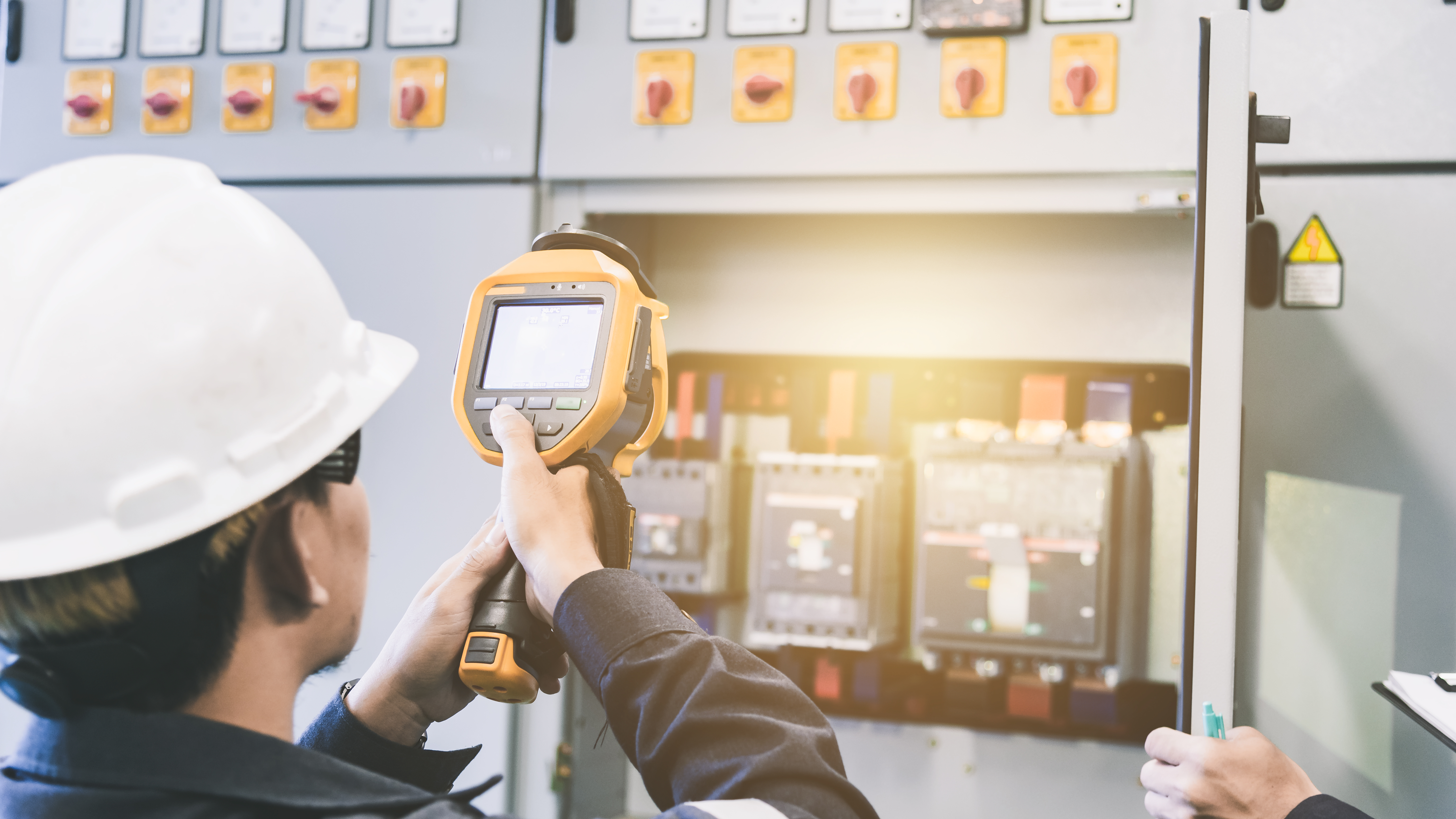

Thermal imaging is a powerful electrical diagnostic and inspection tool that’s increasingly used across commercial, industrial, and residential settings. Unlike standard cameras that capture visible light, thermal cameras “see” infrared radiation (heat), allowing them to visualise temperature differences that are invisible to the naked eye.
How Thermal Imaging Works
Every object emits infrared radiation based on its temperature. Thermal imaging cameras detect this radiation and convert it into a visual heat map, known as a thermogram. Hotter areas appear in brighter colours (e.g., red or orange), while cooler areas appear darker (e.g., blue or purple).
This non-contact method means technicians can inspect equipment and structures safely, quickly and without disruption. It’s ideal for electrical systems where heat can signal potential issues before failure occurs.
Why Thermal Imaging Matters in Electrical Work
For electrical professionals like us at CJ Timms, thermal imaging is invaluable because heat often reveals problems before they turn into failures or hazards. Some common scenarios include:
- Overheating electrical panels: Hotspots can indicate loose connections or overloaded circuits.
- Early fire risk detection: Abnormal heat patterns often precede visible signs of damage.
- Equipment maintenance: Motors and machinery with rising temperatures may indicate wear or friction.
- Preventative diagnostics: Spotting issues early can reduce downtime and costly breakdowns.
In essence, thermal imaging gives electrical inspectors a “sixth sense” for hidden electrical issues that standard visual inspections might miss.
Key Benefits of Thermal Imaging
Here’s why thermal imaging has become a must-have service:
Early Detection of Problems
By showing temperature differences, thermal imaging spots issues before they escalate into failure or safety hazards.
Improved Safety
Technicians don’t need to touch potentially dangerous equipment, they can assess faults remotely.
Faster and More Accurate Inspections
Thermal scanners quickly highlight areas of concern, saving time compared with traditional point-by-point testing.
Cost Savings
Catching faults early helps reduce maintenance costs and avoids expensive emergency repairs.
Non-Invasive & Non-Disruptive
Thermal cameras work without physical contact or disassembly, ideal for live systems and busy work environments.
If you’re curious about how thermal imaging could benefit your business or property, get in touch with our team for friendly advice and support.